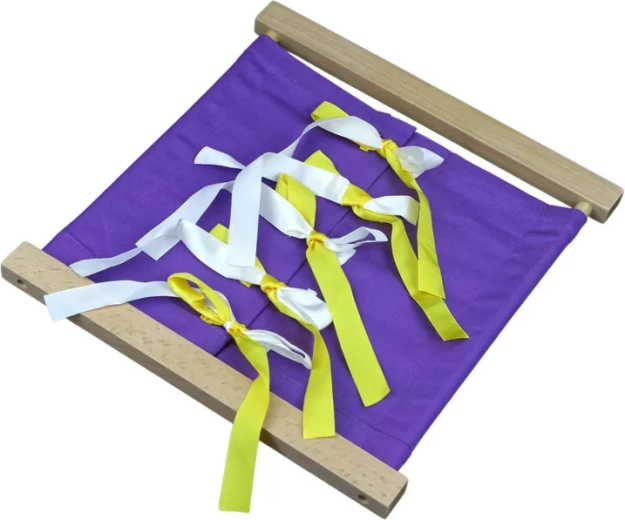
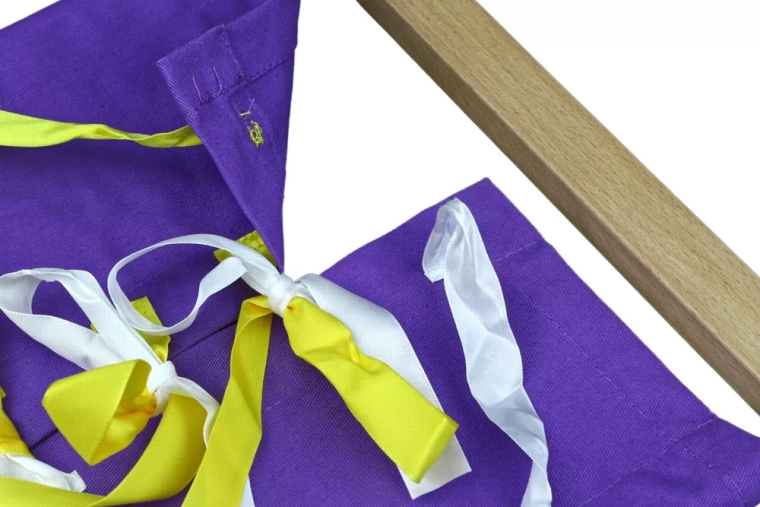
Montessori fastening frame for tying a bow from the practical life area helps the child safely practice the bow-tying technique and at the same time develops fine motor skills, movement coordination, concentration and independence when dressing.
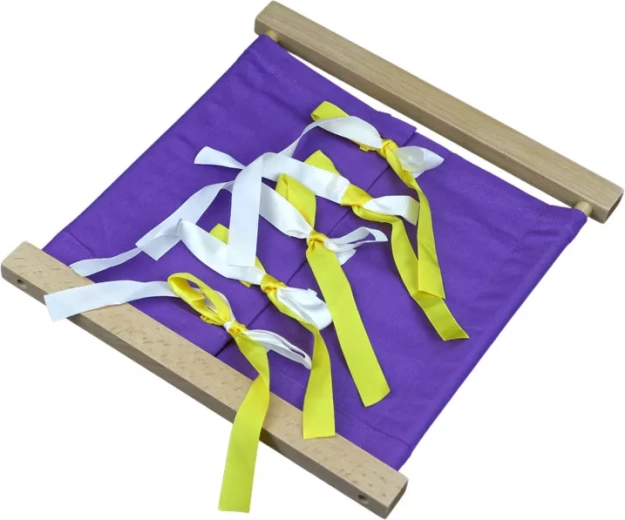
Bow tying practice step by step
The frame is designed so that the child can focus directly on the bow-tying technique. Repetition builds confidence and transfers the skill into everyday life.
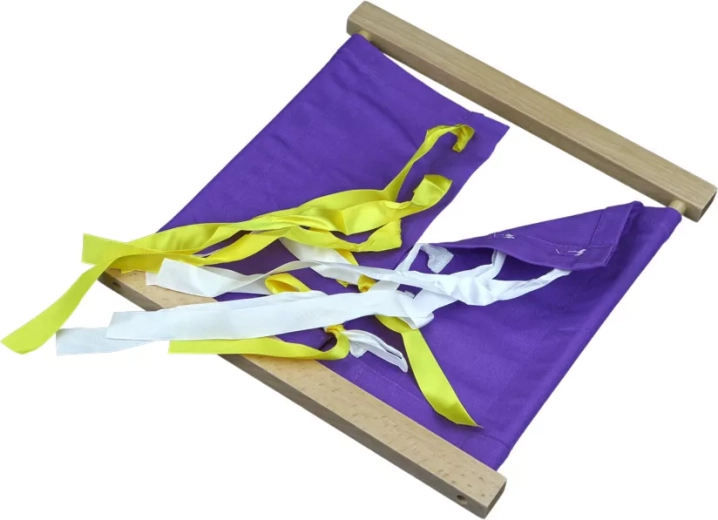
Support for independence and concentration
The activity develops independence when dressing and at the same time trains patience, perseverance and focus when completing the task.
Fine motor skills and preparation for writing
Handling the ribbons and tying them strengthens fine motor skills, movement control and contributes to preparing the hand to hold a pencil.
The fastening frame – bow is a classic Montessori material focused on self-care. The child learns step by step how to tie a bow so that they can then use the skill in everyday life (e.g. on clothing or footwear). The activity naturally supports concentration, patience and perseverance when completing the task.
Direct aim: bow-tying technique
Indirect aims:
- Coordination and movement control
- Independence from adult help when dressing
- Patience, perseverance and concentration
- Development of will
- Use in other everyday life activities as well
- Preparing the hand to hold a pencil
Recommendation: suitable to introduce only after mastering the material Fastening frame – belt (buckle).
Specifications
- Material type
- Montessori material – practical life (self-care)
- Direct aim
- Bow-tying technique
- Indirect aims
- Coordination and movement control; independence when dressing; patience, perseverance and concentration; development of will; use in other everyday life activities; preparing the hand to hold a pencil
- Recommended age
- From 4 years
- Progression recommendation
- Introduce after mastering: Fastening frame – belt (buckle)
- Brand
- Moyo Montessori