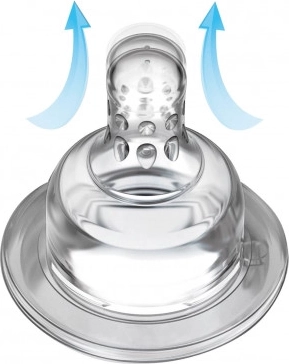
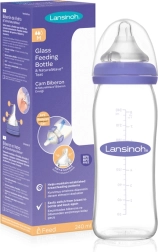
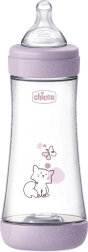
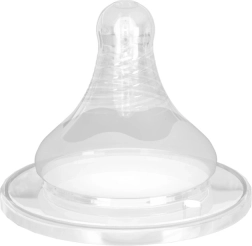
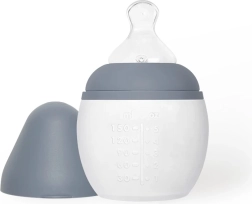
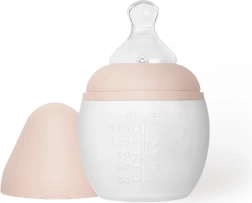
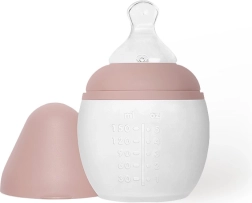
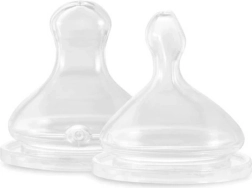
The LOVI dynamic teat is made of heterogeneous layers of silicone. During feeding it modifies its shape (elongates), adapting to the rhythm and strength of the baby’s suction similarly to the mother’s nipple during breastfeeding. The system of internal openings, designed after lactation ducts, regulates (slows) the flow of food and stimulates the baby to actively suck. Enables combining breastfeeding and bottle-feeding. Pack of 2 pieces in a plastic capsule. Available in six flow rates: 18/749 mini, 18/750 slow, 18/751 medium, 18/752 fast, 18/753 porridge, 18/754 triple-flow.
The LOVI dynamic teat supports the proper development of the child’s entire oral cavity:
- Active sucking: The LOVI dynamic teat and bottle are designed to “teach” the baby to actively work while sucking, as during breastfeeding, which stimulates the correct development of the entire oral cavity. The profiled shape of the LOVI bottle allows proper holding and the bottle can move in line with the baby’s sucking rhythm and strength.
- Speech development: Research by speech therapists shows that active sucking stimulates areas involved in speech development. The LOVI dynamic teat enables active training of these areas from the first days of life.
- Healthy bite: The wide, easy-to-latch base of the LOVI teat does not deform during feeding, supports the development of a natural, correct bite and creates a lovely smile for your child.
- Proper breathing: The shape of the LOVI teat requires proper lip placement and teaches the child to breathe correctly through the nose.
- Anti-colic teat: A unique venting system minimizes the risk of infant colic.
Dynamic tip of the teat made from a thinner silicone layer, elongates like the mother’s nipple. A firm, wide, shaped base made from a thicker silicone layer requires proper lip placement as during breastfeeding. Channels in the teat mimic breast lactation ducts, regulating flow and pressure of milk in the teat. A venting system in the form of a special diaphragm in the teat prevents vacuum formation and minimizes infant colic.
Instructions for use: Before first use, sterilize the teat in boiling water for about 5 minutes for hygienic reasons. Wash before each use. After use, remove food residue from the teat, rinse, wash and then sterilize in a steam/electric sterilizer or in boiling water. We do not recommend washing the teat in a dishwasher, as detergents used may damage the product. Do not use any chemical disinfectants! Check the teat’s condition before each use. Pay extra attention after the baby’s first teeth erupt. Test the teat thoroughly by stretching it in all directions. At the first signs of damage, discard the teat immediately and do not use it further. Do not tighten the cap with the teat too strongly—otherwise the teat cannot vent properly. Check that food does not leak from under the screw cap. Do not pierce or enlarge the holes in the teat—you may destroy it. Do not leave the teat in direct sunlight, near a heat source or in sterilizing solutions longer than recommended, as this may weaken the teat. For hygiene and safety reasons, we recommend replacing the teat after 2 months. Fruit juices and teas may cause the teat to discolor; this does not change its properties.
Warning! Important for the health and safety of your child! Use only under the direct supervision of an adult. Never use the teat as a pacifier. Prolonged and frequent sucking of liquids may cause tooth enamel defects. Always check the temperature of the food before serving. This product is not a toy. Keep out of reach of children.
NOTICE: The LOVI brand recommends breastfeeding as the best and healthiest form of child nutrition. Always consult alternative feeding methods with a pediatrician, midwife, pediatric nurse, or pharmacist. Use them only if breastfeeding is impossible or insufficient.
The teat complies with the requirements of: Regulation (EC) No 1935/2004 of the European Parliament and of the Council – general requirements for materials and articles intended to come into contact with food; EN 14350-1 Child care articles – Drinking equipment – Part 1: General and mechanical requirements and tests; EN 14350-2 Child care articles – Drinking equipment – Part 2: Chemical requirements and tests.